https://quizlet.com/de/karteikarten/detective-guide-prepositions-1178349506
The Prepositions, Unplugged
Every German preposition, what it does, and what case it demands
Prepositions are the joints of a German sentence. They connect verbs to objects, nouns to nouns, and clauses to time, place, cause, and manner. Get them wrong and the whole sentence wobbles. Get them right and your German sounds natural, which is the single hardest thing to fake at C1.
Below, every preposition is presented as its own card: the word, what case it triggers, what it actually means, and two or three example sentences with translations. Read this once end-to-end. Then keep it open while you do Sprachbausteine drills.
Part 1 · Always Akkusativ
- Wir gingen durch den Park.We walked through the park. (physical movement through a space)
- Das Problem wurde durch eine neue Software gelöst.The problem was solved by means of new software. (instrument / means)
- Sie hat das durch harte Arbeit erreicht.She achieved that through hard work. (cause / agency)
- Dieses Geschenk ist für meinen Vater.This gift is for my father. (recipient / beneficiary)
- Ich bin für den Vorschlag.I am in favour of the proposal. (support)
- Sie hat das Projekt für drei Monate übernommen.She took on the project for three months. (defined duration)
- Viele Bürger sind gegen das neue Gesetz.Many citizens are against the new law. (opposition)
- Das Auto ist gegen einen Baum gefahren.The car drove into a tree. (collision)
- Wir treffen uns gegen acht Uhr.We are meeting around eight o’clock. (approximate time)
- Ich trinke meinen Kaffee ohne Zucker.I drink my coffee without sugar.
- Er ist ohne ein Wort gegangen.He left without a word.
- Ohne deine Hilfe hätte ich es nicht geschafft.Without your help I would not have managed it.
- Die Erde dreht sich um die Sonne.The Earth revolves around the sun. (circular motion)
- Das Meeting beginnt um 14 Uhr.The meeting begins at 2 p.m. (exact clock time)
- Es geht um eine wichtige Frage.This is about an important question. (topic)
- Ich arbeite bis nächsten Freitag.I am working until next Friday. (time limit)
- Der Zug fährt bis Hamburg.The train goes as far as Hamburg. (spatial endpoint)
- Die Frist läuft bis Ende des Monats.The deadline runs until the end of the month.
Note: bis is often combined with another preposition — bis zum, bis nach, bis auf — and then the second preposition decides the case.
- Wir gingen den Fluss entlang.We walked along the river.
- Die Straße entlang standen alte Bäume.Old trees stood along the road.
Quirk: entlang takes Akkusativ when it follows the noun (the standard pattern). When it precedes, it takes Genitiv or Dativ — but post-positioned + Akkusativ is what you will see in the exam.
Part 2 · Always Dativ
- Sie kommt aus der Schweiz.She is from Switzerland. (origin / nationality)
- Er nahm das Buch aus dem Regal.He took the book out of the shelf. (movement out of)
- Der Tisch ist aus Eichenholz.The table is made of oak wood. (material)
- Ich wohne bei meinen Eltern.I live at my parents’ (place). (residence with)
- Das Restaurant liegt bei der Kirche.The restaurant is near the church. (proximity)
- Beim Lesen trinke ich gerne Tee.While reading I like to drink tea. (simultaneous action)
- Ich gehe mit meiner Schwester ins Kino.I am going to the cinema with my sister. (accompaniment)
- Wir fahren mit dem Zug nach Berlin.We are travelling to Berlin by train. (mode of transport)
- Sie schreibt mit einem Bleistift.She is writing with a pencil. (instrument)
- Wir fliegen morgen nach Italien.We are flying to Italy tomorrow. (destination)
- Nach dem Essen machen wir einen Spaziergang.After the meal we will go for a walk. (after in time)
- Meiner Meinung nach ist das ein Fehler.In my opinion, that is a mistake. (according to — note post-position)
- Ich lerne seit drei Jahren Deutsch.I have been learning German for three years. (ongoing duration)
- Seit dem Unfall kann er nicht mehr Auto fahren.Since the accident he can no longer drive. (starting point)
- Seit gestern regnet es ununterbrochen.It has been raining non-stop since yesterday.
- Ich habe einen Brief von meinem Bruder bekommen.I received a letter from my brother. (sender)
- Das ist die Mutter von Lukas.That is Lukas’s mother. (possession — colloquial alternative to Genitiv)
- Das Buch wurde von einem Studenten geschrieben.The book was written by a student. (passive agent)
- Ich gehe zum Arzt.I am going to the doctor. (destination — person or institution)
- Wir fahren zu einer Konferenz.We are travelling to a conference. (event destination)
- Was möchtest du zum Geburtstag?What would you like for your birthday? (occasion)
- Die Apotheke liegt gegenüber dem Bahnhof.The pharmacy is opposite the train station. (physical location)
- Er ist seinen Kollegen gegenüber sehr hilfsbereit.He is very helpful towards his colleagues. (attitude — note post-position)
Part 3 · Always Genitiv
- Trotz des Regens sind wir spazieren gegangen.Despite the rain we went for a walk.
- Trotz schlechter Bewertungen blieb das Restaurant beliebt.In spite of bad reviews the restaurant remained popular.
- Wegen eines Streiks fielen die Züge aus.Because of a strike the trains were cancelled.
- Sie konnte wegen ihrer Krankheit nicht kommen.She could not come due to her illness.
- Während des Meetings klingelte mein Handy.During the meeting my phone rang.
- Während der letzten Jahre hat sich viel verändert.Over the last few years much has changed.
Do not confuse the preposition (während + Genitiv) with the subordinating conjunction (während + verb at the end).
- Statt eines Kaffees nahm sie einen Tee.Instead of a coffee she had a tea.
- Anstatt einer Antwort bekam ich nur ein Lächeln.Instead of an answer I got only a smile.
- Aufgrund technischer Probleme verspätet sich der Flug.Owing to technical problems the flight is delayed.
- Die Entscheidung wurde aufgrund neuer Daten revidiert.The decision was revised on the basis of new data.
- Die Daten wurden mittels einer App gesammelt.The data was collected by means of an app.
- Mittels moderner Technik ist das heute leicht möglich.By means of modern technology that is easily possible today.
- Hinsichtlich der Kosten müssen wir noch verhandeln.With regard to the costs we still need to negotiate.
- Hinsichtlich der Qualität gibt es keine Bedenken.Concerning the quality there are no concerns.
- Angesichts der wirtschaftlichen Lage müssen wir vorsichtig planen.In view of the economic situation we must plan carefully.
- Angesichts dieser Ergebnisse ist eine Reform unvermeidlich.Given these results a reform is unavoidable.
Part 4 · Wechselpräpositionen — the case-switchers
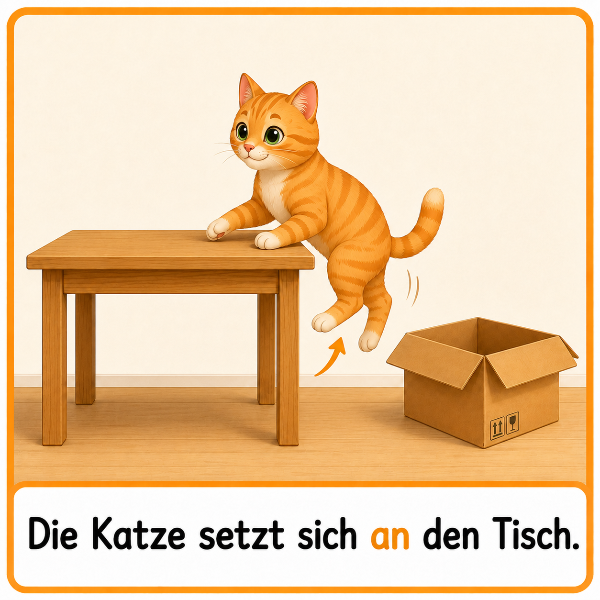
- Ich hänge das Bild an die Wand.I am hanging the picture on the wall. (placing it there)
- Wir fahren an die Nordsee.We are travelling to the North Sea coast.
- Das Bild hängt an der Wand.The picture hangs on the wall. (location)
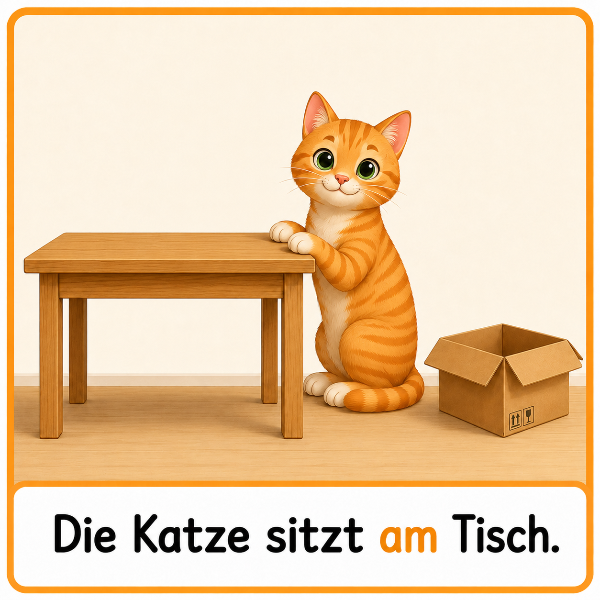
- Sie wohnt am Meer.She lives by the sea.
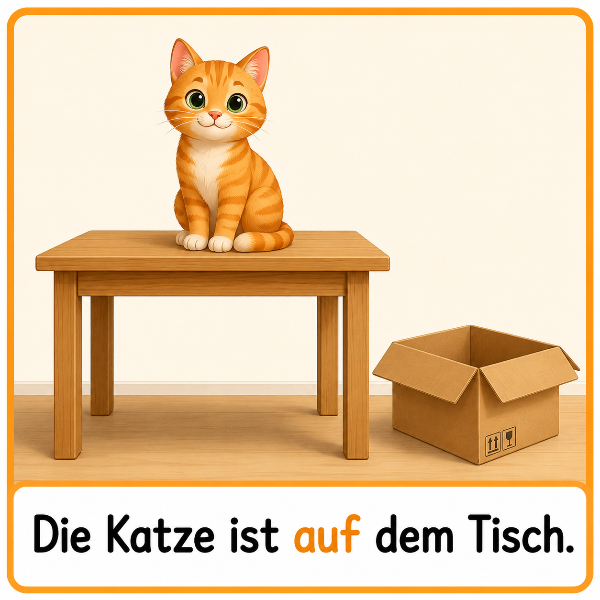
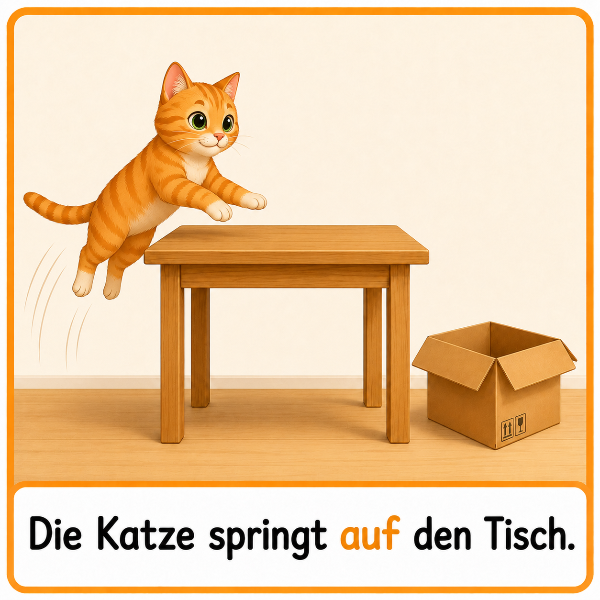
- Stell die Tasse auf den Tisch.Put the cup on the table. (placing it there)
- Ich gehe auf eine Konferenz.I am going to a conference.
- Die Tasse steht auf dem Tisch.The cup is on the table. (location)
- Wir sind gerade auf einer Konferenz.We are at a conference right now.
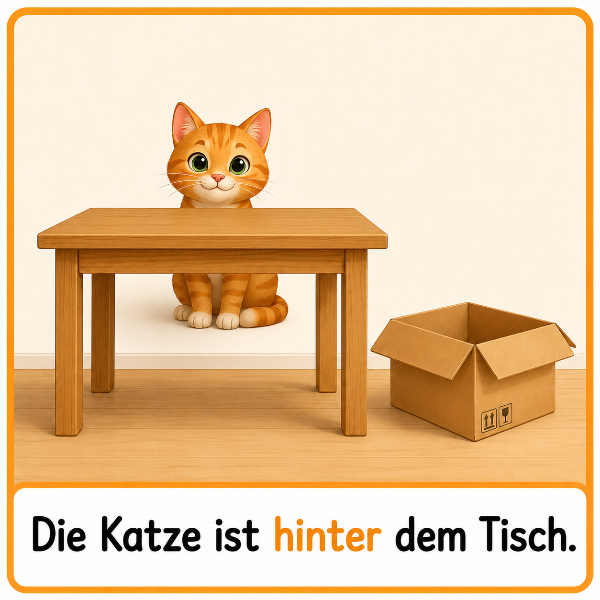
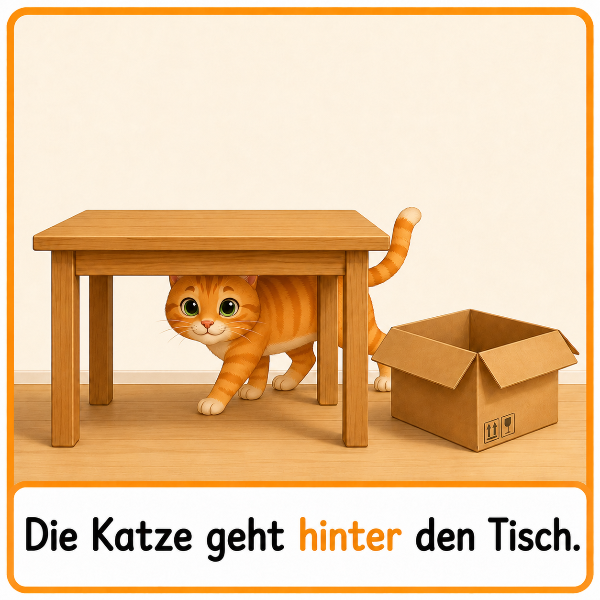
- Er stellt das Fahrrad hinter das Haus.He puts the bicycle behind the house. (motion to)
- Das Fahrrad steht hinter dem Haus.The bicycle is behind the house. (location)
- Hinter der Bühne war es chaotisch.Backstage it was chaotic.
- Ich gehe in den Park.I am going into the park. (entering)
- Wir fliegen in die Schweiz.We are flying to Switzerland. (countries with article)
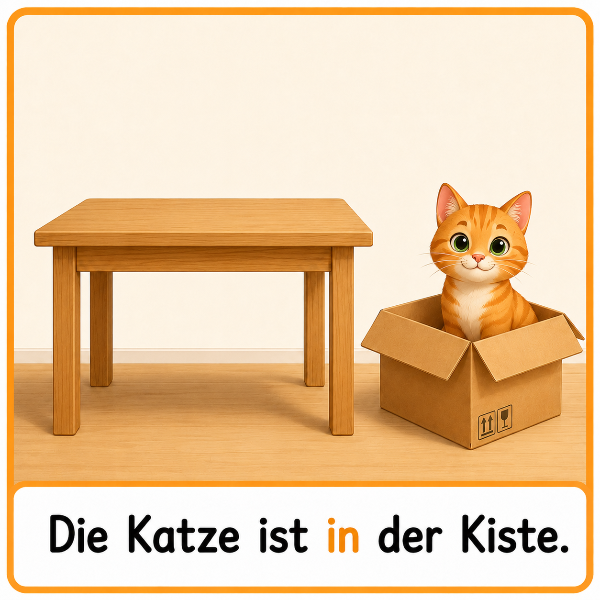
- Ich bin im Park.I am in the park. (location)
- Sie wohnt in der Schweiz.She lives in Switzerland.
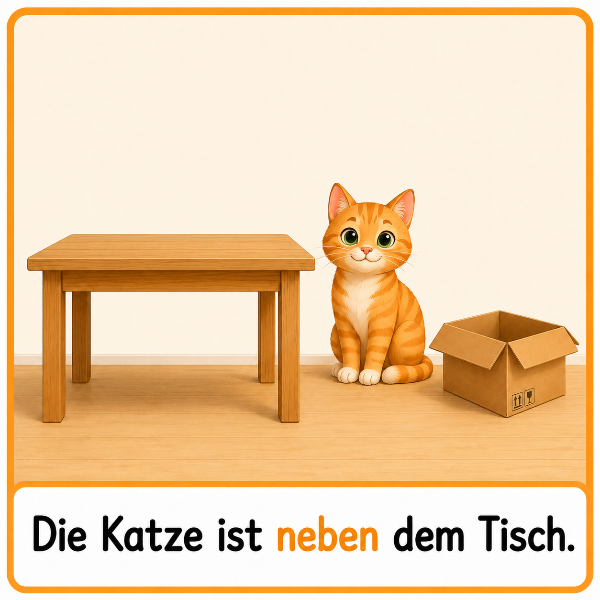
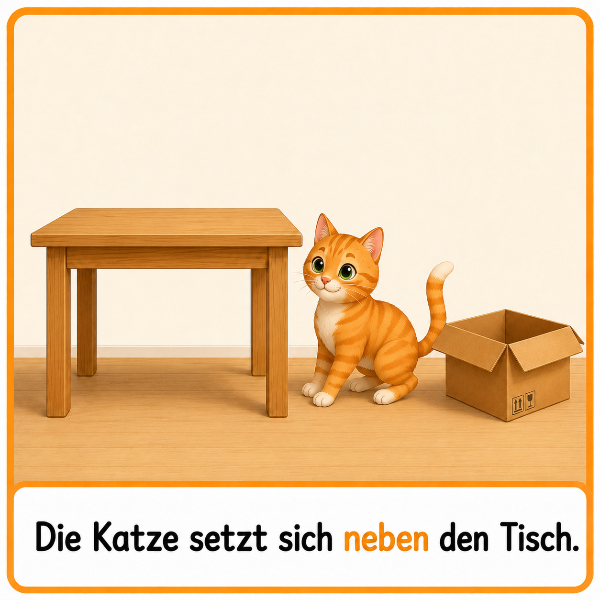
- Setz dich neben mich!Sit down next to me! (movement to that spot)
- Sie sitzt neben ihrem Mann.She is sitting next to her husband. (location)
- Neben seiner Arbeit studiert er Psychologie.In addition to his job he is studying psychology.
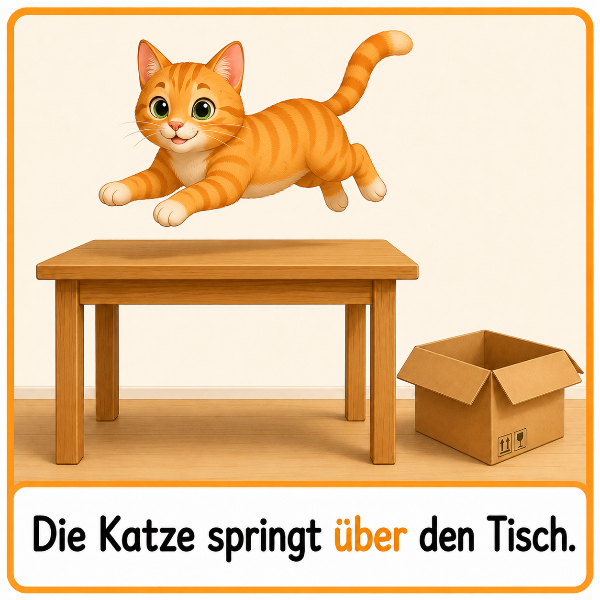
- Wir gehen über die Brücke.We are walking across the bridge. (motion across)
- Wir sprechen über das Problem.We are talking about the problem. (always Akk. with sprechen / reden / diskutieren)
- Die Lampe hängt über dem Tisch.The lamp hangs over the table. (location)
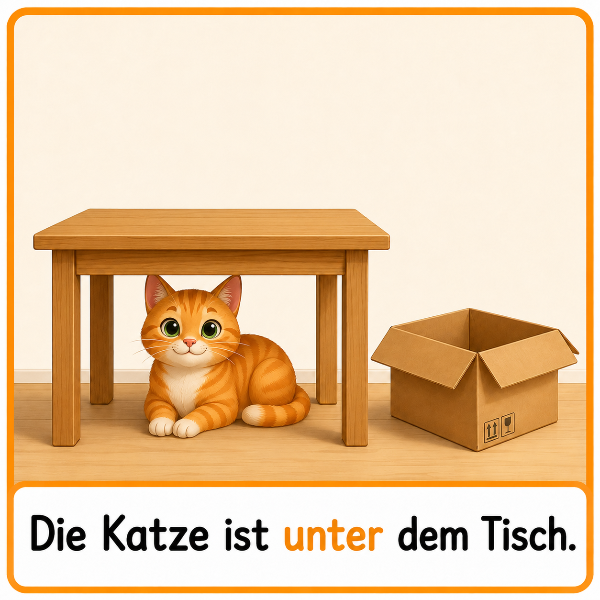
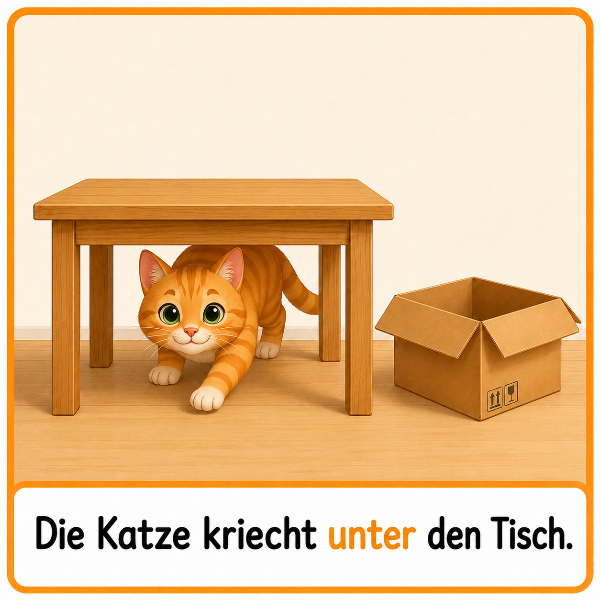
- Die Katze kroch unter das Bett.The cat crawled under the bed. (motion to)
- Die Katze schläft unter dem Bett.The cat is sleeping under the bed. (location)
- Unter den Studenten ist sie sehr beliebt.Among the students she is very popular.
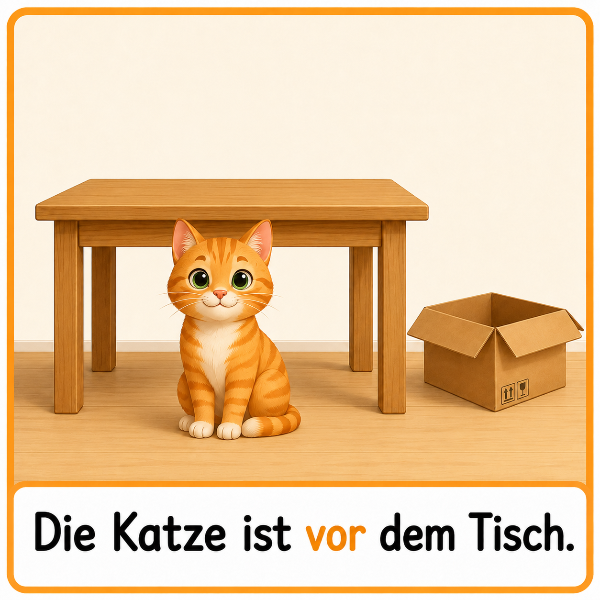
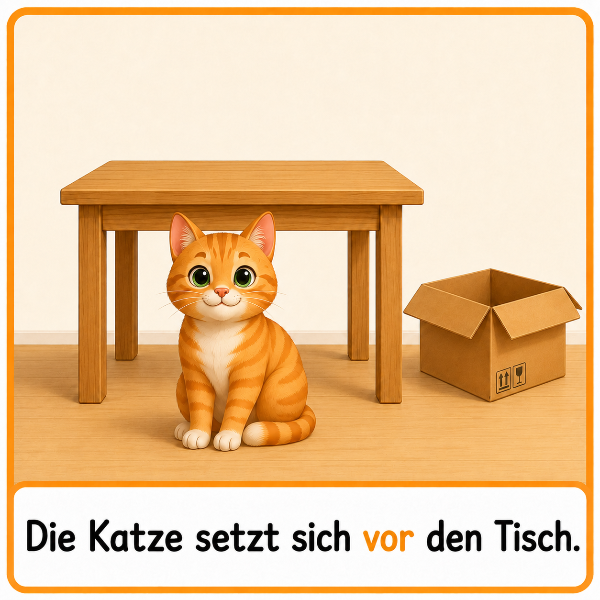
- Sie stellt das Auto vor das Haus.She parks the car in front of the house. (motion to)
- Das Auto steht vor dem Haus.The car is in front of the house. (location)
- Ich war vor einem Jahr in Berlin.I was in Berlin a year ago. (time — always Dativ)
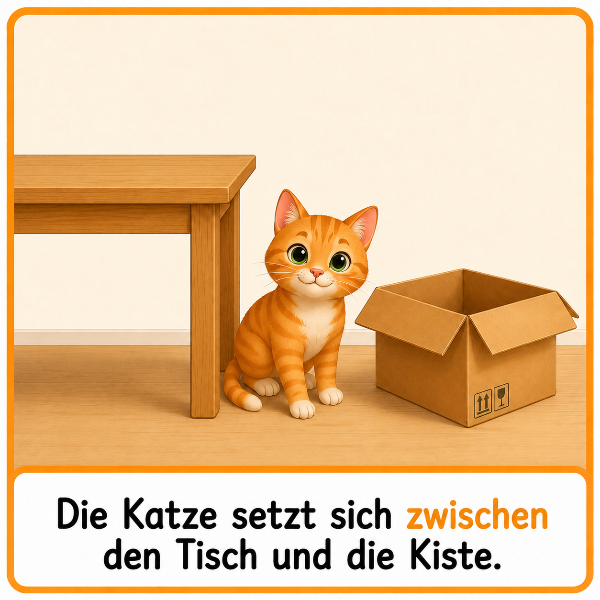
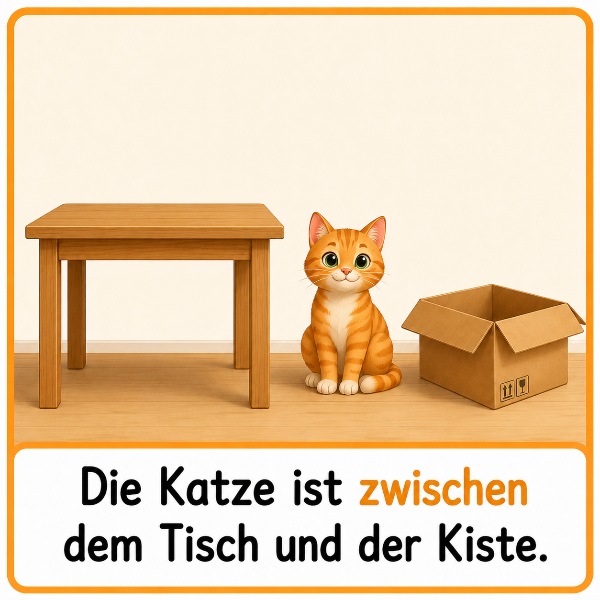
- Stell den Stuhl zwischen das Sofa und den Tisch.Put the chair between the sofa and the table. (placing)
- Der Stuhl steht zwischen dem Sofa und dem Tisch.The chair stands between the sofa and the table. (location)
- Zwischen uns gibt es keine Geheimnisse.Between us there are no secrets. (figurative — Dativ)
How to internalise this
Three passes. First pass: read the article straight through. Do not stop to memorise — let the patterns soak in.
Second pass: for each preposition, cover the example sentences and produce one of your own about your daily life. “Ich gehe nach der Arbeit ins Fitnessstudio.” “Wegen des schlechten Wetters bleibe ich zu Hause.” Personal sentences anchor the case.
Third pass: drill only the Wechselpräpositionen. They are where most C1 candidates lose marks. Take any verb (stellen / stehen, legen / liegen, hängen / hängen, sich setzen / sitzen) and consciously practice the Wohin-Wo distinction. Ich stelle das Glas auf den Tisch. Das Glas steht auf dem Tisch. Twenty pairs and the reflex sets in.
For Sprachbausteine specifically: when you see a preposition gap, your first move is not to find the meaning — it is to identify the noun phrase that follows the gap. Look at the article (der/dem/den/des) and you already have the case. From the case, you eliminate two-thirds of the prepositions. Meaning then resolves the rest. That is the order: case first, meaning second.